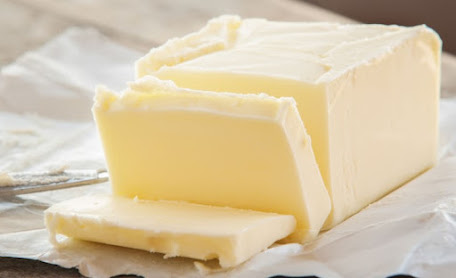
Dairy products comprise substantial part of total sodium intake in the diet. Various types of cheeses, ayran and butter contain varying levels of salt and particularly cheeses have high levels of salt in their composition. Butter is essentially a water-in-oil emulsion, comprising of more than 80% milk fat, but also containing water in the form of tiny droplets, perhaps some milk SNF, with or without salt (sweet butter).
According to PFA (Prevention of Food Adulteration) food law, table /creamy butter should contain not more than 3% common salt. It should not contain any preservatives except common salt. Salted butter is produced by adding salt in the unsalted butter in the butter making process.
During butter making process, chilled water at approximately 5 °C is used to harden and control the size of these grains, as well as to remove the traces of buttermilk.
Salt may be added dry or in the form of brine as a final wash. The addition of brine (10% solution) to butter grains has been used to reduce the need for chilled water.
• If the butter is to be salted, in batch process, salt (1-3%) is spread over its surface.
• In the continuous butter maker, a salt slurry (10% concentration) is added to the butter.
The butter grains are ‘worked’ to expel excess moisture, create an even, fine distribution of water droplets, and produce a close textured, evenly colored product.
Salt, as wells as its role in the taste, preserves the product and extends the shelf-life - the average shelf-life of salted butter is five months when refrigerated while this period is three months in unsalted butter.
Salted butter enhances the taste of toasts and other foods as the salt bring out not only the butter flavor, but the other flavors that are in the food.
Butter salting process
Just another blog about food processing and the important of food processing. It is about the conversion of raw materials or ingredients into the consumer product. Food processing also can be defined as the branch of manufacturing that starts with raw animal, vegetable, or marine materials and transforms them into intermediate foods stuff or edible products through the application of labor, machinery, energy, and scientific knowledge.
Showing posts with label salting. Show all posts
Thursday, February 03, 2022
Thursday, January 13, 2022
Process of dry salting
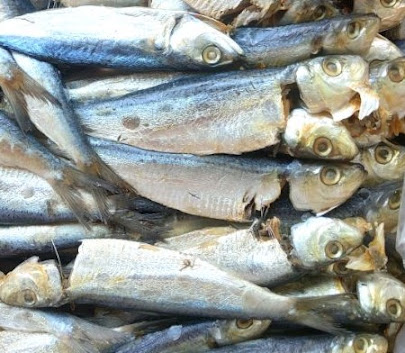
Dry salting is a process of fermentation method that involves sprinkling salt onto a dry vegetable or fish in order to draw out the water. Salting is one of the oldest methods of preservation. Salting is a process where the common salt (NaCl), sodium chloride, is used as a preservative that penetrates the tissue; hence prevent or drastically reduce bacterial action.
Penetration ends when the salt concentration of the tissue equals that of the surrounding medium. This phenomenon is known as osmosis.
Some of the factors involved in salting of fish which play important role are purity of salt, quantify of salt used, method of salting, and weather conditions, flavor of the product.
In dry salting, the size of salt crystals is important. Fine crystals tend to dissolve too quickly and are dragged down and drained, whereas large crystals dissolve very slowly and there is a risk of deterioration. Fine crystals and larger crystals should be combined. The fine crystals will dissolve quickly and salt will penetrate the flesh immediately.
Salting is one of the techniques for preserving fish and has been practiced for a long period of time; it is an alternative to lowering the water activity of fish flesh. Dry salting is the most widely used method of fish curing. The main purpose of salting is to separate water from the fish and replace it with salt. Thus, the water concertation in fish decreases.
The fish is gutted, beheaded or ventrally split open and the viscera removed followed by washing. Scoring is also practiced if the flesh portion is thick for facilitating better salt penetration. Salt is then applied in the ratio 1:3 to 1: 10 (salt to fish) depending upon the size of the fish.
To ensure that fish dries well, dry salting is recommended for lean fish, not fatty fish.
Process of dry salting
Penetration ends when the salt concentration of the tissue equals that of the surrounding medium. This phenomenon is known as osmosis.
Some of the factors involved in salting of fish which play important role are purity of salt, quantify of salt used, method of salting, and weather conditions, flavor of the product.
In dry salting, the size of salt crystals is important. Fine crystals tend to dissolve too quickly and are dragged down and drained, whereas large crystals dissolve very slowly and there is a risk of deterioration. Fine crystals and larger crystals should be combined. The fine crystals will dissolve quickly and salt will penetrate the flesh immediately.
Salting is one of the techniques for preserving fish and has been practiced for a long period of time; it is an alternative to lowering the water activity of fish flesh. Dry salting is the most widely used method of fish curing. The main purpose of salting is to separate water from the fish and replace it with salt. Thus, the water concertation in fish decreases.
The fish is gutted, beheaded or ventrally split open and the viscera removed followed by washing. Scoring is also practiced if the flesh portion is thick for facilitating better salt penetration. Salt is then applied in the ratio 1:3 to 1: 10 (salt to fish) depending upon the size of the fish.
To ensure that fish dries well, dry salting is recommended for lean fish, not fatty fish.
Process of dry salting
Labels:
dry salting,
food preservation,
salting
Monday, August 07, 2017
Food preservation by curing process
Preserving food by various methods has been practiced throughout human history. Curing was originally developed to preserve certain foods by the addition of sodium chloride. In the food industry, the application of curing is related only to certain meat, fish and cheese products.
Meat curing, as commonly performed in products such as ham, or sausage involves the addition of mixtures containing salt, nitrite and other preservatives. Today sodium chloride and sodium and potassium nitrite are considered as curing salts.
Over several millennia additional processes concomitant with curing have evolved, notably fermentation, smoking, drying and heating. Most of these methods work through removing moisture from the meat and replacing it with salt and preserving agents that inhibit the growth of bacteria and decay.
Food treated by curing must be re-hydrated and carefully rinsed before use. It is also still considered raw, so meats will still require cooking.
An important benefit to curing meat for use in the home is to maintain a readily available source of meat when the electricity goes out and there is no refrigeration.
For some people, the greatest benefit might be to known that their family will not be exposed to some of the various chemicals that are found in commercially prepare meats.
Food preservation by curing process
Meat curing, as commonly performed in products such as ham, or sausage involves the addition of mixtures containing salt, nitrite and other preservatives. Today sodium chloride and sodium and potassium nitrite are considered as curing salts.
Over several millennia additional processes concomitant with curing have evolved, notably fermentation, smoking, drying and heating. Most of these methods work through removing moisture from the meat and replacing it with salt and preserving agents that inhibit the growth of bacteria and decay.
Food treated by curing must be re-hydrated and carefully rinsed before use. It is also still considered raw, so meats will still require cooking.
An important benefit to curing meat for use in the home is to maintain a readily available source of meat when the electricity goes out and there is no refrigeration.
For some people, the greatest benefit might be to known that their family will not be exposed to some of the various chemicals that are found in commercially prepare meats.
Food preservation by curing process
Labels:
curing process,
food preservation,
salting
Subscribe to:
Posts (Atom)
Most Popular Articles
-
Yes, alcohol can indeed be made from dates using a traditional process known in some cultures as Dakhai. This method utilizes the natural s...
-
The ripened bananas are peeled, traditionally by hand and more recently by using mechanical peelers. Once the peels are separated the mash...
-
Food extrusion entails the mixing and molding of low moisture food materials, and more recently, high moisture food materials, by passing th...
-
The oat flaking process is a carefully controlled sequence of steps that transforms whole oat grains into the familiar flat flakes used in b...
-
Steam plays a pivotal role in the food processing industry, combining efficiency with versatility to meet the demands of modern food product...