Showing posts with label microorganism. Show all posts

Tuesday, June 02, 2009

Food Spoilage and Biological Factors

Food Spoilage and Biological Factors
Processed and natural foods are composed mainly of carbohydrates proteins and fats.

The major constituents in vegetables and fruits are carbohydrates, including sugars (sucrose, etc), polymers of sugars (starch) and other complex carbohydrates such as fibers.

Fats are the major components of milk and most cheeses, and proteins are the chief constituents of muscle foods.

Under natural storage conditions, foods start to deteriorate once the living cells in the foods (plant and animal origins) are dead.

Either when the cells are dead or if the tissues are damaged, deterioration begins with the secretion of internal proteases (such as chymotrypsin and trypsin to break up proteins at specific amino acid positions), lipases and lyases from lyzosomes to disintegrate the cells, to hydrolyze proteins into amino acids and starch into simpler sugars (or monosaccharides), and to de-esterificate fats ( triglycerides) into fatty acids.

The exposure of foods and damaged cells to the environment attracts microorganisms (e.g. bacteria, molds and virus) and insects, which in turn further accelerate the decomposition of the food.

For most food poisoning, spoilage has not reached the stage where the sensory attributes (appearance, smell, taste, texture, etc.) of the food are abnormal.

Illness form food can be mainly classified as:

  • 1.Food borne infection caused by pathogenic bacteria (disease-causing microorganisms, such as Salmonella bacteria, multiplying in victim’s digestive tract causing diarrhea, vomiting and fever, etc.)
  • 2. Food borne intoxication (food poisoning resulting from toxin produced by pathogenic microorganisms, e.g. Clostridium botulinum and Staphylococcus aureus, in the digestive tract).

Food borne illness also has a major economic impact on society, costing billions of dollars each year in the form of medical bills, lost work time, and reduced productivity.
Food Spoilage and Biological Factors

Sunday, January 28, 2007

Preservation by High Osmotic Pressure

Preservation by High Osmotic Pressure
Bacteria reach osmotic equilibrium by two means:
1.In hypertonic environments the volume of the protoplasts will shrink.

2.In hypotonic environments the rigid wall will resist increase in protoplasts volume at a limiting volume of water; equilibrium results from turgor against the wall.

The rigid wall present in the bacteria cells enables most bacteria to tolerate even extremely dilute environments. Osmotic equilibrium is achieved by the development of turgor pressure against the wall. The wall of gram positive micrococci can withstand 22 atm of pressure.

Although the walls of gram-negative rods have a lower tensile strengths , the walls is sufficiently strong to retain the turgor pressure if the cell is suspended in water.

Turgor against a rigid walls is apparently a much simpler development than the mechanism utilized by many protozoa for similar purposes. Protozoa a contractile vacuole to pump out the water in adapting to osmotic pressure in order to maintain equilibrium.
Preservation by High Osmotic Pressure

Tuesday, January 02, 2007

The Effect of drying on microorganisms


The Effect of drying on microorganisms
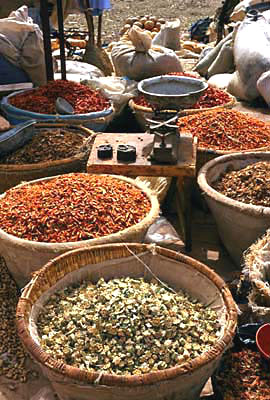
The main purpose of drying foods is to lower their moisture content to a particular level that will exclude the growth of microorganisms (bacteria, mould and yeasts).

For any given moisture content, one food may support the growth of microorganisms will growth in a dried food depends on the water activity.


The lower the water activity of a food, the less probable that microorganisms will grow. Generally, mold at lower water activities than yeasts and yeasts will grow at lower water activities than bacteria. For this reason, mold are opt to grow in dried foods than are yeasts or bacteria.

In dried foods, the moisture content is lowered to the point which microorganisms will not grow and it is kept that way through packaging, which includes moisture.

Water activity also can be lowered by soluble components, such as sugar or salt.

Thus, certain syrup and salted, partially dried foods (e.g foods) are relatively stable as far as at the growth of microorganisms is concerned , although there may be conditions in which they become subject to the growth of yeasts or molds.
The Effect of drying on microorganisms

Most Popular Articles

BannerFans.com